Africa

Central Hub for Africa

Navigating the Regulatory Landscape

This page serves as a centralized resource for exploring pharmaceutical regulatory requirements across Africa. Each country listed below includes a short overview of its compliance landscape and a link to further information. As regulatory frameworks across the continent continue to develop and mature, this hub supports awareness and navigation of the evolving mandates shaping pharmaceutical supply chains region-wide.

All Regulations

Graphic element

Ethiopian EFDA

Pharmaceutical products in Ethiopia are regulated by the Ethiopian Food and Drug Authority (EFDA) under the Food and Medicine Administration Proclamation No. 1112/2019. Ethiopia has introduced regulatory requirements to improve medicine traceability and combat counterfeit pharmaceutical products.

The EFDA requires pharmaceutical manufacturers and importers to implement serialization using GS1 compliant DataMatrix barcodes on medicine packaging. The system enables verification of medicines and supports supply chain monitoring from manufacturers and importers through distribution.

The Ethiopian traceability framework is designed to align with global GS1 identification standards and supports electronic verification of medicines throughout the supply chain. Serialization requirements apply primarily to human prescription medicines and selected priority pharmaceutical products.

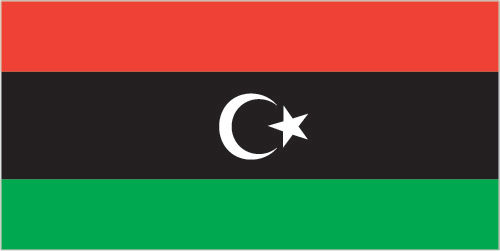
Libya

Pharmaceutical products in Libya are regulated by the Libyan Ministry of Health and the Libyan National Center for Food and Drug Control (NCFDC). The regulatory framework focuses on ensuring medicine quality, preventing counterfeit products, and strengthening oversight of pharmaceutical imports and distribution.

Libya has introduced initiatives to improve medicine authentication and supply chain monitoring, including the use of barcode based product identification on pharmaceutical packaging. These measures are intended to support verification of medicines distributed within the country and improve regulatory monitoring.

However, Libya does not currently operate a fully implemented national pharmaceutical serialization or track and trace system. Regulatory oversight relies primarily on medicine registration, import control, and inspection of distribution channels.

Pharmaceutical companies supplying medicines to Libya should monitor regulatory developments, as authorities have expressed interest in expanding digital traceability mechanisms in the future.

Rwanda

Rwanda has established a national framework for pharmaceutical traceability under the Rwanda Food and Drugs Authority (Rwanda FDA). The system is designed to improve medicine safety, strengthen supply chain visibility, and reduce the risk of falsified medicines in the market.

The regulatory framework requires the use of global identification standards and structured data sharing across the pharmaceutical supply chain. Rwanda’s traceability strategy is built on GS1 standards and includes product identification, location identification, and master data governance through a national product catalogue.

Manufacturers, importers, distributors, and supply chain partners must implement standardized identification and data capture processes to support product traceability from manufacturer to healthcare facilities.

Zambia

Zambia is implementing pharmaceutical traceability controls under the Zambia Medicines Regulatory Authority (ZAMRA). The framework focuses on standardized product identification, barcode based traceability, and improved monitoring of medicine distribution across the national supply chain.

The objective of the traceability program is to strengthen supply chain visibility, prevent falsified medicines, and support efficient product recalls and regulatory oversight.

Manufacturers, importers, distributors, and healthcare institutions supplying medicines to Zambia must adopt standardized product identification and maintain traceability records for pharmaceutical distribution.

No Regulations Found

Click clear all to reset the filters.

Thank you! Your submission has been received!
Oops! Something went wrong while submitting the form.
Contact us

Get in touch today

Send us a message

We'd love to hear from you!

Check - Elements Webflow Library - BRIX Templates

Thank you

Thanks for reaching out. We will get back to you soon.
Oops! Something went wrong while submitting the form.