Middle East

Central Hub for the Middle East

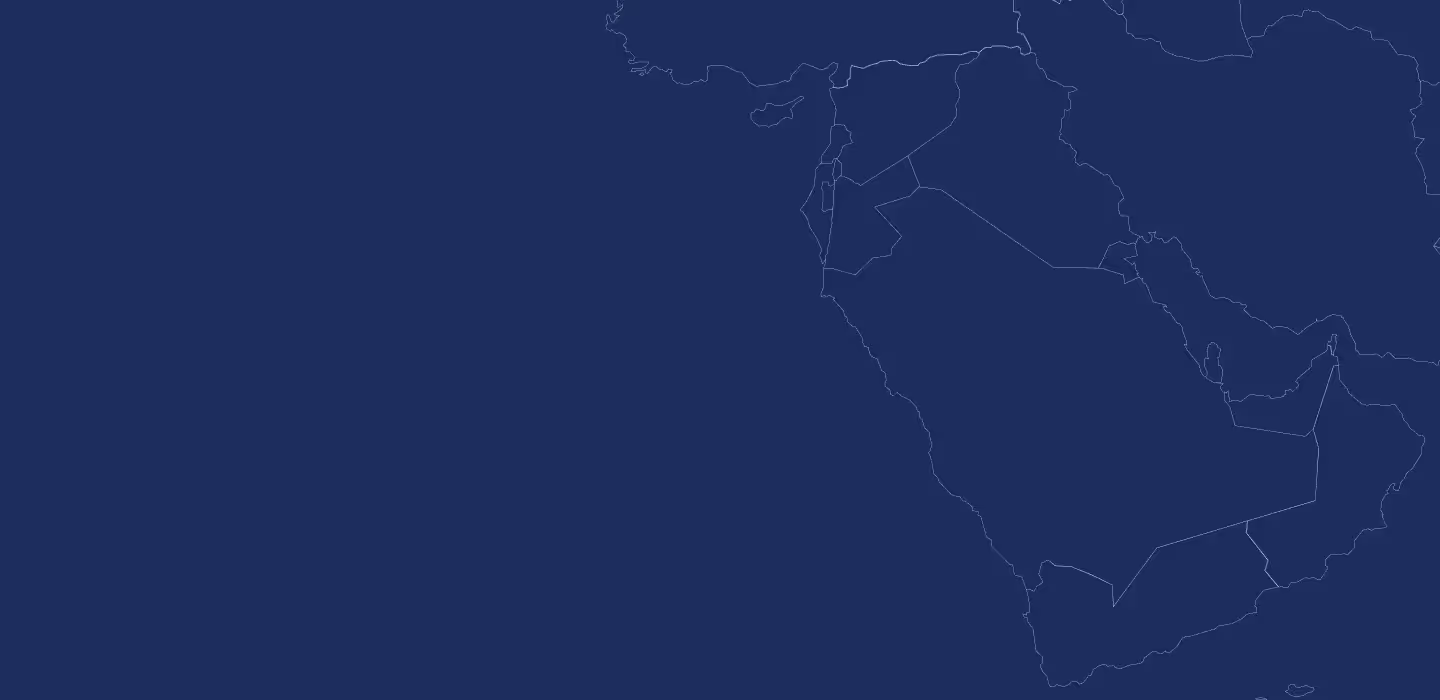
Map of the Middle Eastern region highlighting compliance regions

Navigating the Regulatory Landscape

This page serves as a centralized resource for understanding pharmaceutical regulatory requirements across countries in the Middle East. Each country listed below includes a summary of its compliance landscape along with a link to more detailed information. From serialization initiatives to national track-and-trace mandates, this hub provides streamlined access to the regulatory frameworks governing pharmaceutical supply chains across the region.

All Regulations

Graphic element

Bahrain

Bahrain requires pharmaceutical manufacturers, importers and distributors to serialize and track medicines through the NHRA Track and Trace System. All human medicines imported into Bahrain must carry GS1 DataMatrix barcodes and must be reported at key steps in the supply chain.

Bahrain’s model is similar to the systems used across the GCC region, aiming to improve patient safety and prevent counterfeit medicines. While less complex than Russia or Kazakhstan, Bahrain still requires accurate serialization, aggregation and event reporting for customs clearance and distribution.

Egypt

Egypt has implemented a national pharmaceutical traceability framework to improve medicine supply chain transparency and combat counterfeit products. The system is managed through the Egyptian Drug Authority (EDA) under the Ministry of Health.

Egypt’s traceability framework is built around the Egyptian Drug Tracking System (EDTS), which requires pharmaceutical products to carry GS1 compliant DataMatrix barcodes with serialized identifiers. The system enables tracking of medicines from manufacturers and importers through distribution to pharmacies.

The EDTS platform supports digital verification of medicines and helps regulators monitor product movement across the pharmaceutical supply chain. Serialization and traceability requirements apply primarily to human prescription medicines, with implementation occurring in phases.

Iraq

Iraq regulates pharmaceutical products through the Ministry of Health and the State Company for Marketing Drugs and Medical Appliances (KIMADIA). In recent years, the Iraqi government has taken steps to strengthen medicine supply chain security and combat counterfeit pharmaceutical products through the introduction of digital verification and traceability measures.

Iraq has introduced requirements for certain medicines to carry GS1 compliant DataMatrix barcodes to enable product verification and improve traceability within the supply chain. The initiative aims to support authentication of medicines distributed through government procurement channels and licensed distributors.

Implementation of serialization requirements has been phased, with priority given to medicines supplied through public healthcare programs and government distribution networks. The system is intended to improve oversight of pharmaceutical imports and distribution within Iraq.

Lebanon

Pharmaceutical products in Lebanon are regulated by the Ministry of Public Health (MOPH). Lebanon has introduced a national pharmaceutical verification and traceability initiative designed to improve supply chain transparency and combat counterfeit medicines.

The country operates a Medicine Barcode System that requires pharmaceutical products to carry GS1 compliant DataMatrix barcodes. The barcode enables verification of medicines through the Ministry of Public Health digital verification platform.

The Lebanese traceability initiative allows healthcare professionals, pharmacists, and regulators to verify medicines by scanning the barcode and confirming product authenticity through the national system. The framework supports identification of medicines throughout the distribution process and helps detect counterfeit or illegally imported products.

Serialization requirements apply primarily to human medicines registered and distributed within the Lebanese pharmaceutical market.

Oman

Pharmaceutical products in Oman are regulated by the Ministry of Health (MOH) through the Directorate General of Pharmaceutical Affairs and Drug Control (DGPA&DC). Oman has introduced barcode based identification requirements for medicines to improve product verification and strengthen pharmaceutical supply chain monitoring.

Oman aligns with GCC pharmaceutical identification standards, which encourage the use of GS1 compliant DataMatrix barcodes on pharmaceutical packaging. These barcodes enable unique identification of medicines and support verification during distribution and dispensing.

While Oman requires standardized barcode identification for medicines, the country does not currently operate a centralized national serialization reporting platform comparable to those implemented in some other GCC markets. Traceability oversight is primarily supported through product identification standards, supply chain documentation, and regulatory inspections.

Qatar

Qatar does not have a publicly documented national pharmaceutical serialization and traceability system equivalent to Tatmeen, EMVS, or MDLP. The clearest published requirement identified is a GS1 based barcoding requirement tied to Hamad Medical Corporation, or HMC, tender and supply chain requirements, rather than a nationwide serial event reporting model managed by a central pharma traceability hub. (Hamad Medical Corporation)

Qatar has also established GS1 Qatar as the local GS1 member organization, which supports GTIN, GLN, and other GS1 identification standards used by companies operating in the market. (GS1 Qatar)

No Regulations Found

Click clear all to reset the filters.

Thank you! Your submission has been received!
Oops! Something went wrong while submitting the form.
Contact us

Get in touch today

Send us a message

We'd love to hear from you!

Check - Elements Webflow Library - BRIX Templates

Thank you

Thanks for reaching out. We will get back to you soon.
Oops! Something went wrong while submitting the form.